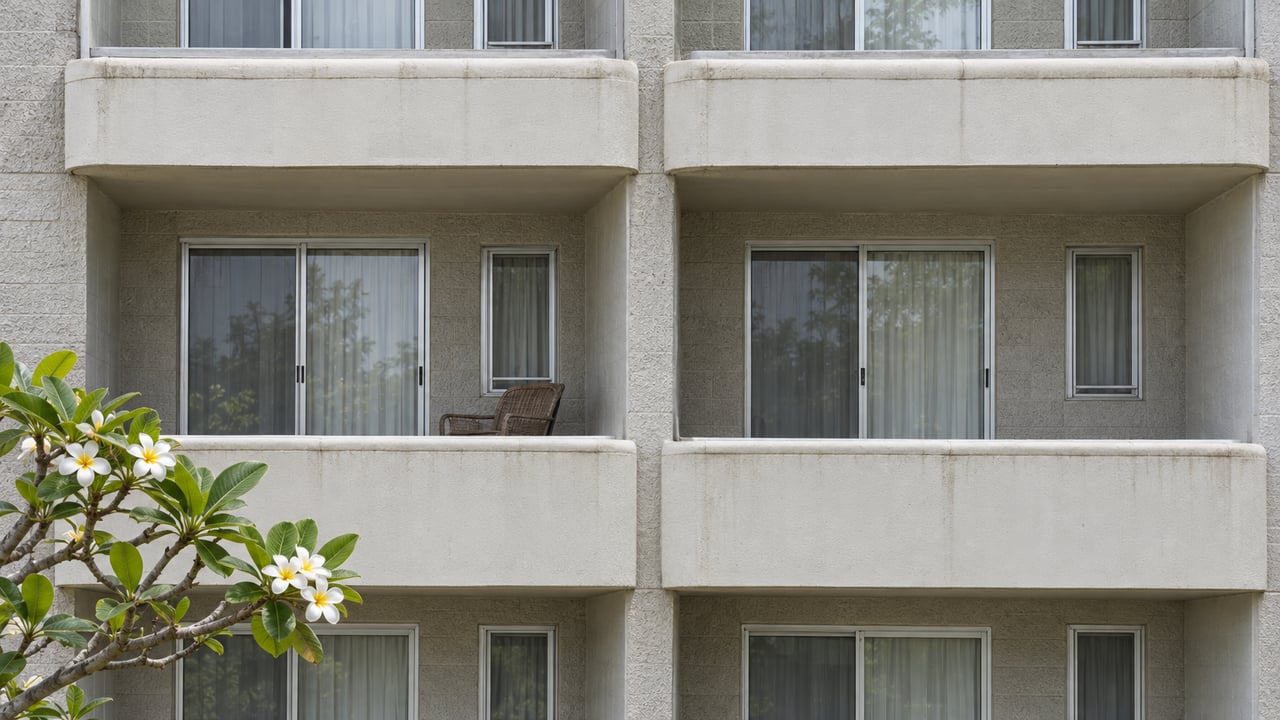
If you buy a unit in an unsprinklered Honolulu high-rise this fall, there's a date coming that the listing won't mention. Under the city's current fire code, every existing residential high-rise that hasn't passed its fire and life safety evaluation must, no later than May 3, 2030, meet with unit owners "to discuss a design plan, financing options, and implementation timelines," and then file a statement of intent with the fire department. That meeting is where the dollar figure gets named. Someone who closes in 2026 is paying a price set before that figure exists.
The 2024 extension gave buildings until 2038 to finish the work. The cost is still there, and the owners who pay it will be whoever holds the units when the work gets done.
The deadline everyone quotes is out of date
Honolulu passed its high-rise ordinance in 2018, after the July 2017 Marco Polo fire killed four people in a 36-story building that was built in 1971 without sprinklers. The Honolulu Fire Department's sprinkler page still describes the original schedule: evaluations within three years, steps to pass within seven. A KHON2 story from July 27, 2026 gave those years as 2021 and 2025.
Those dates don't govern anymore. In December 2024 the City Council pushed the deadline to 2038 and added an interim 2030 deadline for associations to come up with a plan to pay for the work, as Honolulu Civil Beat reported. Bill 55 became Ordinance 25-4, approved January 3, 2025. The new fire code took effect that same day. These are the milestones in the current Honolulu Fire Code, Section 13.3.2.25.2:
| Date | What the code requires |
|---|---|
| August 31, 2022 | Fire and life safety evaluation conducted by a licensed design professional, with scores given to the association |
| May 3, 2030 | Owner meeting on design, financing and timeline, plus a filed statement of intent. Buildings choosing sprinklers also file a financial and design plan |
| May 3, 2038 | Acceptable evaluation score, or the building protected by sprinklers or AHJ-approved alternative systems |
| May 3, 2048 | Possible extension for common areas, only if sprinklers already cover the common areas along the egress path |
For a buyer, 2030 is the date that matters. 2038 is when the work has to be finished, and 2030 is when the bill shows up. The 2030 requirement isn't optional for buildings that plan to pass through alternative measures instead of sprinklers. The owner meeting and the filed statement apply to every building that still needs an acceptable score.
How many buildings this covers, and what the work has cost
The scale is large. Civil Beat reported that a little more than 20 of over 300 high-rises had passed the evaluation as of August 2024. In November 2024 the outlet quoted HFD as counting 288 high-rises that had neither automatic sprinklers nor an acceptable evaluation score. Both are 2024 snapshots. HFD's high-rise inventory, updated April 24, 2026, lists buildings by name across Waikīkī, Ala Moana, Makiki and Kahala.
The finished projects give a sense of the cost. Marco Polo's sprinklers, added in 2021, cost $6 million, or about $10,500 per unit. Kahala Towers' projected retrofit was put at $4 million to $5 million, about $17,000 to $21,500 per unit. Those costs don't come alone. In an August 2024 Civil Beat report, Kahala Towers owners also faced asbestos abatement estimated at $6,000 to $8,000 per unit and possible relocation for up to 12 days during the work. In the same report, the building's board president said insurance had risen from $120,000 to $720,000.
Sprinklers are one line in a longer list of repairs that older buildings face together. A June 2026 Hawaii Business investigation traced the costs at aging Honolulu condos to failing cast-iron drain pipes, concrete spalling, elevator modernization, roofs and sprinkler installation. It also quoted the Honolulu Board of REALTORS president as saying fees had risen 70% over the prior decade. The same piece followed a 37-unit Hawaiʻi Kai complex from the 1970s. Its fees passed $1,000 a month, it added a one-year assessment of nearly $300 a month for reserves, and its hurricane premium went from $51,555 in 2023 to $247,824 in 2024 before falling to $148,086 in 2025.
Why older condos look cheap right now
That's the backdrop for this year's condo numbers. In August 2026, the most recent month the Honolulu Board of REALTORS has published, the Oʻahu condo median was $510,000, down 1.0% year over year. Closed sales fell 6.6% to 365, while active inventory rose 4.1% to 2,512 listings. Single-family sales rose in the same month. Board president Aaron Tangonan said condo sellers "faced greater competition and generally took longer to secure offers than single-family home sellers," with buyers "remaining cost-conscious." In August, 48% of Oʻahu condo sales closed under $500,000.
A lot of that sub-$500,000 supply sits in older buildings, and fees there have been rising. UHERO's 2026 Hawaiʻi Housing Factbook found a median advertised fee of $882 among Oʻahu listings in February 2026, with the highest fees in some older buildings whose reserves hadn't kept up with maintenance. Hawaii Business described a Waikīkī two-bedroom priced at $550,000 that carried a $1,400 monthly fee and a projected $300 assessment on top.
In an unsprinklered tower, the fire-safety work will add to those monthly figures, and the amount stays unknown until the association presents its plan.
What a buyer can check before 2030
Several pieces of this are already public or required to be disclosed.
- Find the building on HFD's list. The April 24, 2026 inventory names each existing residential high-rise covered by Ordinance 19-04. Being on the list means the building is covered. It doesn't show whether the building has passed.
- Ask for the evaluation scores. The code requires the licensed design professional to give the association the scores in each category. A building close to a passing score faces a different bill than one that needs sprinklers throughout.
- Check the opt-out disclosure. An association of a building 10 floors or higher that opts out of sprinklers by passing the evaluation or using alternative systems must give "verifiable disclosure" to current and future owners, including real estate sales disclosures.
- Ask whether the 2030 owner meeting has happened. If the association has already filed its statement of intent, the design plan and financing options should exist on paper.
- Read the insurance and reserve figures alongside the fire-safety plan. In a July 2025 report, Hawaii Business wrote that Fannie Mae eligibility can depend on insurance, reserves, litigation and unresolved safety issues.
Some buildings are fully exempt from the sprinkler requirement. These include high-rises where every unit has exterior access and a continuous egress path with no full-length interior corridors, and buildings under 10 floors, which can meet the requirement with an acceptable evaluation score. Building layout affects the cost, so look at the floor plan along with the year built.
This is general information, not legal, financial or insurance advice. Before you make an offer, confirm a specific building's obligations and your own financing with a real estate attorney, lender or the association.
The state help, and its limits
Two state programs touch this, and neither covers the full cost.
The Hawaiʻi Hurricane Relief Fund is taking applications from associations through licensed producers. It provides excess hurricane-only coverage above a separate primary policy, in one-year terms. To qualify, an association needs at least two insurer denials and more than $10 million in total insured value. Competition from the state program has helped some buildings. Hawaii News Now reported in December 2025 that the Hale Kulanui building's hurricane premium fell from $103,633 to $37,475.
On the repair side, the Hawaiʻi Green Infrastructure Authority's Condominium Association Loan Program lists fire sprinkler and fire-safety upgrades as eligible uses. Act 296 was signed July 7, 2025, the administrative rules were approved May 7, 2026, and new commitments may be made through June 30, 2027 depending on available funds. The program page currently says it is "on hold." HGIA's July 2026 program guide sets 7% fixed interest on HGIA-originated loans for up to 20 years and requires borrowing associations to increase replacement reserves during the loan. Even when the program is open, owners repay the loan through their fees, so it spreads the cost out. It doesn't reduce it.
Quick answers
Does the 2038 deadline mean every older building has to install sprinklers? No. Under the current code, a building can comply with sprinklers, with an acceptable evaluation score, or with alternative systems approved by the fire department, and some layouts are exempt.
What happens if the city is slow to issue a permit? The code pauses the compliance clock when a complete permit application from a licensed specialty contractor sits unprocessed for more than 90 days. It also says no penalties apply to a building whose application was submitted at least 90 days before a deadline and still hadn't been processed by the time that deadline arrived.
Is the Marco Polo figure a good estimate for my building? Use it as one reference point. Marco Polo came in around $10,500 per unit and Kahala Towers was projected at $17,000 to $21,500, so per-unit costs have varied a lot from building to building.
If you're looking at an older tower in Waikīkī, Makiki or Ala Moana, Oahu Lux Homes can help you pull the building's place on HFD's list, its evaluation status and its association documents before you write an offer. And if you already own a unit in one of these buildings, we can walk you through how its 2030 timeline might affect a sale with a free home valuation.