If you have ever wondered why some Diamond Head homes and condos command such strong prices, the answer often starts with a simple idea: protected views are hard to replace. In this part of Honolulu, what you can see and what future development can block are both part of the value story. When you understand how view planes and special district rules work, you can make smarter decisions as a buyer, seller, or owner. Let’s dive in.
Why Diamond Head views matter
Diamond Head is more than a landmark on the skyline. The crater’s natural form and public visibility are important enough that Honolulu created a special district to help preserve its appearance and the public views around it. That means local rules do more than shape buildings. They also shape scarcity.
For you as a buyer or seller, scarcity matters because it can support pricing over time. If certain views are protected and redevelopment is more limited, existing homes with strong sightlines may become harder to replicate. That is one reason view-oriented property around Diamond Head often attracts steady attention.
How the special district works
The district uses mapped rules
Honolulu’s Diamond Head special district is not based on one simple height cap for every property. Instead, the district is mapped and uses precinct-based height limits. In practice, that creates a more tailored set of restrictions depending on where a property sits.
This matters because two nearby properties may not have the same redevelopment potential. A parcel’s value may depend on both the underlying zoning and the added limits that come from the special district overlay. That can affect how buyers, owners, and investors evaluate upside.
Height exceptions are limited
The city may allow a height exception only in narrow cases. Under the code, extra height can be considered if a proposal would not substantially diminish views from public vantage points or if the added height serves an important public objective.
Even then, certain roof or mechanical features are only exempt up to 12 feet above the maximum height limit. For you, the takeaway is simple: reaching beyond the stated limit is not automatic. View protection remains a central part of the review process.
Design rules shape the look and feel
The district is also about more than vertical height. Required yards must be landscaped, street trees are required, and parking structures are expected to be softened with vertical plantings. In some areas, taller walls must be set back and screened.
The code also calls for subdued, nonreflective materials and building design that relates to nearby small-scale development. These rules help preserve the visual setting around Diamond Head, which is part of what buyers are paying for when they choose this area.
Which views are protected
Protected sightlines reach beyond Diamond Head
One of the biggest misconceptions is that these protections only affect homes right next to the crater. In reality, Honolulu identifies significant public views of Diamond Head from many streets and public places across a much wider area.
Those include corridors and public spaces such as Ala Wai Boulevard, Paki Avenue, Diamond Head Road, Date Street, Campbell Avenue, Kalakaua Avenue, Kapahulu Avenue, Monsarrat Avenue, 12th Avenue, 18th Avenue, Kilauea Avenue, Ala Moana Beach and Magic Island, Kapiolani Park, the Honolulu Zoo, the Ala Wai Golf Course, Kahala Triangle Park, H-1 near the Kapahulu overpass, Punchbowl lookouts, and Puu Ualakaa lookout.
That broad list matters because it shows how view preservation influences not only Diamond Head itself, but also nearby public corridors in Waikiki, Kapahulu, Kaimuki, McCully-Moiliili, and Ala Moana. If you own or are buying in these connected areas, public view protections can still affect the surrounding development pattern.
Waikiki has related protections too
Waikiki has its own special district rules that also preserve a view of Diamond Head from Ala Wai Boulevard between McCully Street and Kapahulu Avenue. The code can require additional yard area and building spacing to protect those views.
This is important if you are comparing properties across adjacent neighborhoods. Value is not shaped only by what is on your lot today. It is also shaped by how much future bulk, height, and spacing may be limited nearby.
Why view planes influence property value
Scarcity supports pricing
When a city protects views, it can reduce how easily a competing building can rise and block them. Around Diamond Head, that means redevelopment upside is often constrained before a project reaches what buyers might think of as a normal zoning ceiling.
As a result, existing homes or condos with clean crater or ocean views can become more scarce. Scarcity does not guarantee future appreciation, but it does help explain why certain homes stand apart in buyer demand and pricing.
Existing views can carry a premium
Research cited in the Ohana Hale environmental document found that comparable Honolulu high-rise projects showed about 1% floor premiums and Diamond Head view premiums generally ranging from 1% to 15%. In that comparison set, Diamond Head views were described as the strongest premium.
A separate 2024 peer-reviewed study on sea views found an average premium of 8.1%, rising to 15% for a wide sea view. While sea views and Diamond Head views are not identical, both findings point in the same direction: visibility and breadth of view can have real economic value.
Live pricing reflects the pattern
Recent sales in Diamond Head Terrace help illustrate the same idea in current market activity. Redfin data shows recent sales ranging from about $901,000 for a one-bedroom Kalakaua Avenue unit to $4.0 million for an oceanfront residence on Kalakaua Avenue.
Other Diamond Head Road and Kalakaua Avenue sales also clustered above the broader Honolulu median. In March 2026, the broader Diamond Head-Kapahulu-St. Louis Heights market had a median sale price of $1.08 million. While every property is unique, the spread highlights how view, location, and scarcity can combine to shape value.
What buyers should look for
Ask about both current and future views
If you are buying near Diamond Head, do not stop at the view from the lanai or living room today. You also want to understand what surrounding rules may allow or restrict over time. A strong current view is more meaningful when nearby redevelopment is also constrained.
That is especially true for condos and multifamily properties in and around protected corridors. The value of a view often depends on how durable it may be.
Review property type carefully
Not every property faces the same level of regulation. Single-family and duplex dwellings are generally exempt from the special district rules, except in the core area, where landscaping and architectural appearance rules still apply.
Multifamily and redevelopment parcels usually feel the strongest effect from the special district. If you are comparing homes, condos, or redevelopment opportunities, that distinction can make a real difference in what you are buying.
Look beyond height alone
A view-plane conversation is not only about how tall something can be. Setbacks, spacing, landscaping, screening, and material choices also matter because they affect how development is experienced from the street and from neighboring properties.
For you as a buyer, that means the best value analysis includes both the visible view and the surrounding design framework. In Diamond Head, the setting itself is part of the product.
What sellers should know
Protected views are part of your story
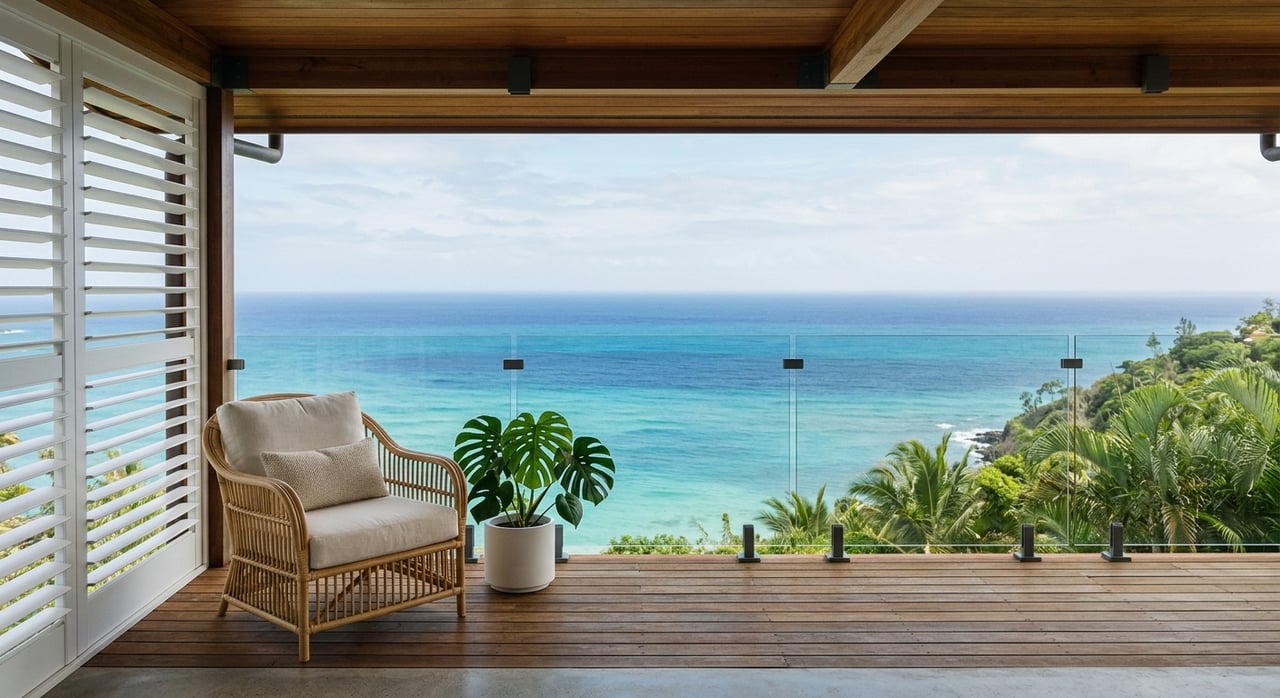
If your property benefits from a crater, ocean, or open corridor view, that feature should be framed in the context of local scarcity. Buyers often respond more strongly when they understand that a view is not just attractive, but also difficult to reproduce because of the surrounding rules.
That does not mean making promises about future development. It means presenting your property with clear local context and showing why the setting holds value in this part of Honolulu.
Pricing should reflect view quality
Not all views carry the same weight. Breadth, angle, elevation, and the balance of ocean, crater, and open sky can all affect how buyers perceive value. A partial peekaboo view and a wide, protected sightline are not the same product.
That is why accurate pricing around Diamond Head should go beyond bedrooms, square footage, and finishes. A thoughtful valuation needs to account for the strength and likely durability of the view experience.
Why local guidance matters
Diamond Head is one of those Honolulu markets where rules, setting, and buyer psychology all intersect. Public view protections, precinct height limits, design standards, and neighborhood context can all influence what a property is worth today and how buyers may view it tomorrow.
If you are buying or selling here, the best strategy is grounded in both code-based context and real market behavior. That combination helps you avoid oversimplifying a property’s value and gives you a clearer path forward.
Whether you are comparing condos on Kalakaua Avenue, evaluating a home near Diamond Head Road, or preparing to sell a view property, working with a team that understands both the numbers and the neighborhood can make a meaningful difference. To start your Oahu home search or request a free home valuation, connect with Ashliey Wasson.
FAQs
What does a view plane mean around Diamond Head?
- Around Diamond Head, a view plane is best understood as a system of protected public sightlines supported by mapped district rules, precinct height limits, setbacks, landscaping, and design review rather than one universal height number.
Do all Diamond Head properties follow the same rules?
- No. Single-family and duplex homes are generally exempt outside the core area, while multifamily properties and redevelopment parcels are typically more affected by the special district rules.
Why do nearby neighborhoods care about Diamond Head view protection?
- Honolulu maps significant public views from many surrounding streets, parks, shoreline areas, and public lookouts, so view protection can influence development patterns beyond Diamond Head itself.
Can a building exceed the height limit in the Diamond Head special district?
- In limited cases, the city may allow extra height if it would not substantially diminish protected public views or if the added height serves an important public objective.
Do Diamond Head views really affect home prices?
- Research in Honolulu found Diamond Head view premiums generally ranging from 1% to 15%, and recent area sales also show that properties with strong location and view attributes can sell well above the broader market median.